


More than buses: the infrastructure behind public transport transformation
For passengers, new buses can look like the beginning of change. In practice, many of the critical decisions are made months, and often years, earlier.
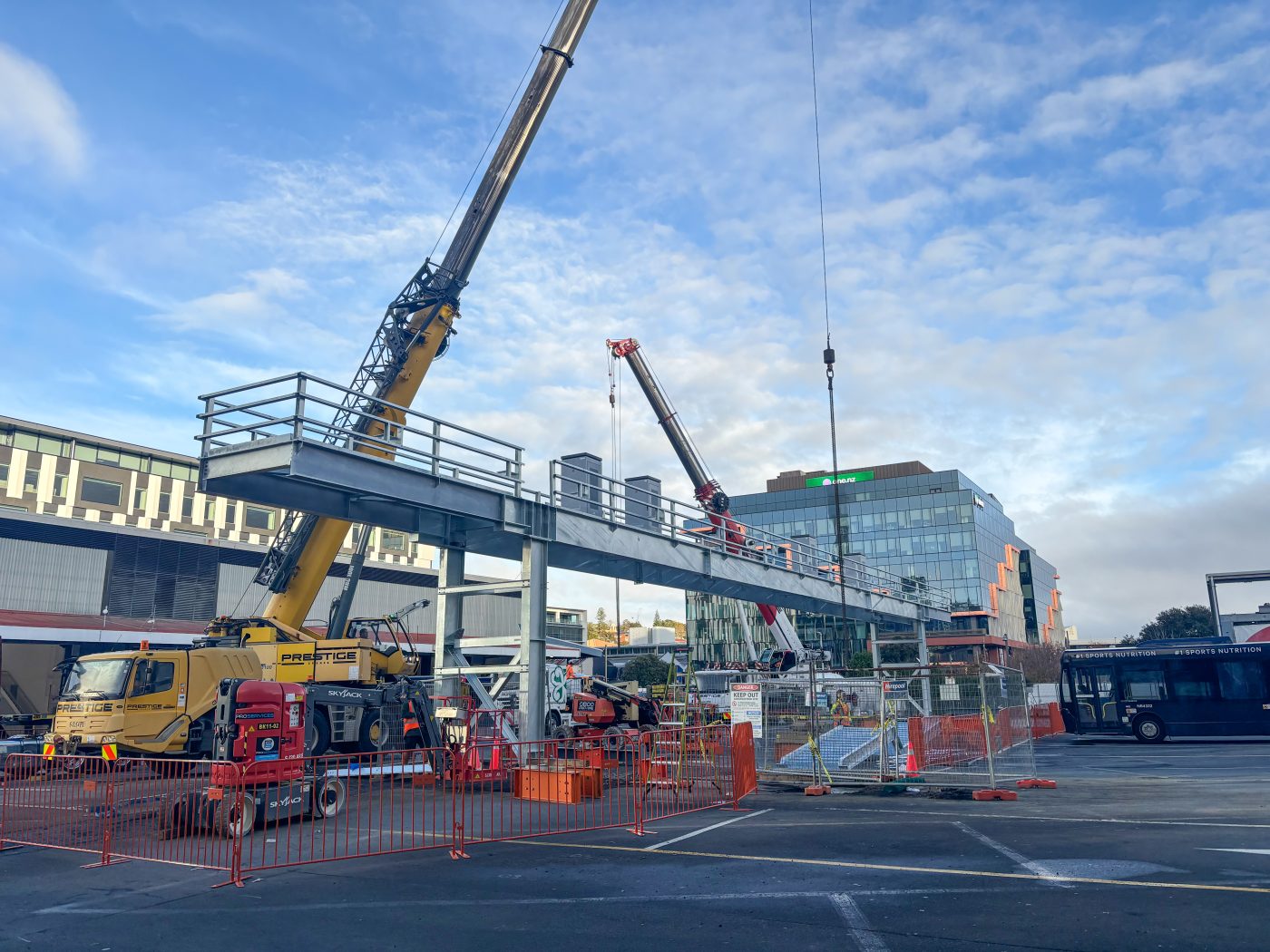
This week, a new overhead gantry charging structure is taking shape at our City depot in Auckland, the second of its kind in New Zealand. It’s a visible milestone, but it’s also the result of years of planning, investment and infrastructure work that most passengers will never see.
Unlike individual ground-mounted chargers, overhead gantry systems run across parking lines with cables that drop to connect to each bus, allowing more vehicles to charge within the same depot footprint. At Kinetic Glenfield, the first depot in New Zealand to introduce this innovation, the system is 25% more space-efficient than traditional chargers, creating a significant advantage in land-constrained urban depots.
That gap between what’s visible and what’s required is at the heart of public transport transformation.
Buses are only part of the story
Under Auckland Transport’s Tranche 3 contracts, Kinetic will deliver the largest single rollout of zero-emission buses at mobilisation in New Zealand. The fleet includes next generation lightweight electric double-deckers designed specifically for New Zealand conditions.
But those buses can only perform reliably with a network of charging, power and maintenance systems around them. Depot upgrades, grid connections, new maintenance protocols and workforce training, all of it must be ready before the first service enters operation. None of it is visible to the people riding the bus.
What electrification actually requires
One of the most common misconceptions about public transport electrification is that it’s essentially a fleet replacement programme. It isn’t.
Introducing a zero-emission fleet means fleet deployment, charging infrastructure, depot capacity, power supply upgrades, operational systems and workforce capability all need to land at the same time. In practice, these workstreams are deeply interdependent. A delay in any one of them pushes out the rest.
Connecting a new power supply is a good example. That single workstream involves design, network planning assessments, procurement, construction, inspections and testing — split across Kinetic and the network service provider, both having to align on the same date. If either party hits a delay at any stage, the whole sequence moves. Multiply that across every system required to mobilise a new depot, and the coordination challenge becomes clear.
In Dunedin, preparations are now underway for the introduction of 37 new electric buses from October. From contract award to go-live represents less than a year — made possible by drawing on existing relationships with network service providers and consultants from previous projects to compress what would otherwise be much longer procurement and design timelines. The depot infrastructure upgrade and the South Island's first overhead gantry charging system will be commissioned and operational before a single new bus enters service.
Building New Zealand’s electric future
Kinetic’s infrastructure investment across New Zealand spans six years and every major region:
2020–2022 Charging infrastructure introduced at:
- Penihnana Place (Māngere) and City depots, Auckland
- Kilbirnie depot, Wellington
- Birmingham Drive and Maces Road depots, Christchurch
2023 New Zealand’s first fully electric bus depot opens at Panmure, Auckland
2024 Australasia’s largest all-electric bus depot opens at New Lynn, Auckland, with 44 charging stations, each capable of charging two buses simultaneously, alongside further electrification at Birmingham Drive, Christchurch
2025 Charging infrastructure introduced at Go Bus Dunedin and Go Bus Invercargill, and Go Bus Mosgiel satellite depot fully electrified. New Zealand’s first large-scale overhead gantry charging system launched at Glenfield, Auckland, capable of charging 31 buses simultaneously
2026 Auckland’s second overhead gantry charging system installed at City depot. South Island’s first overhead gantry charging system commissioned in Dunedin
Public transport transformation is often measured in buses. But the infrastructure behind them — the depots, the charging systems, the grid connections, the operational planning — is what determines whether those buses can deliver. That’s the foundation we’re continuing to build across New Zealand.